
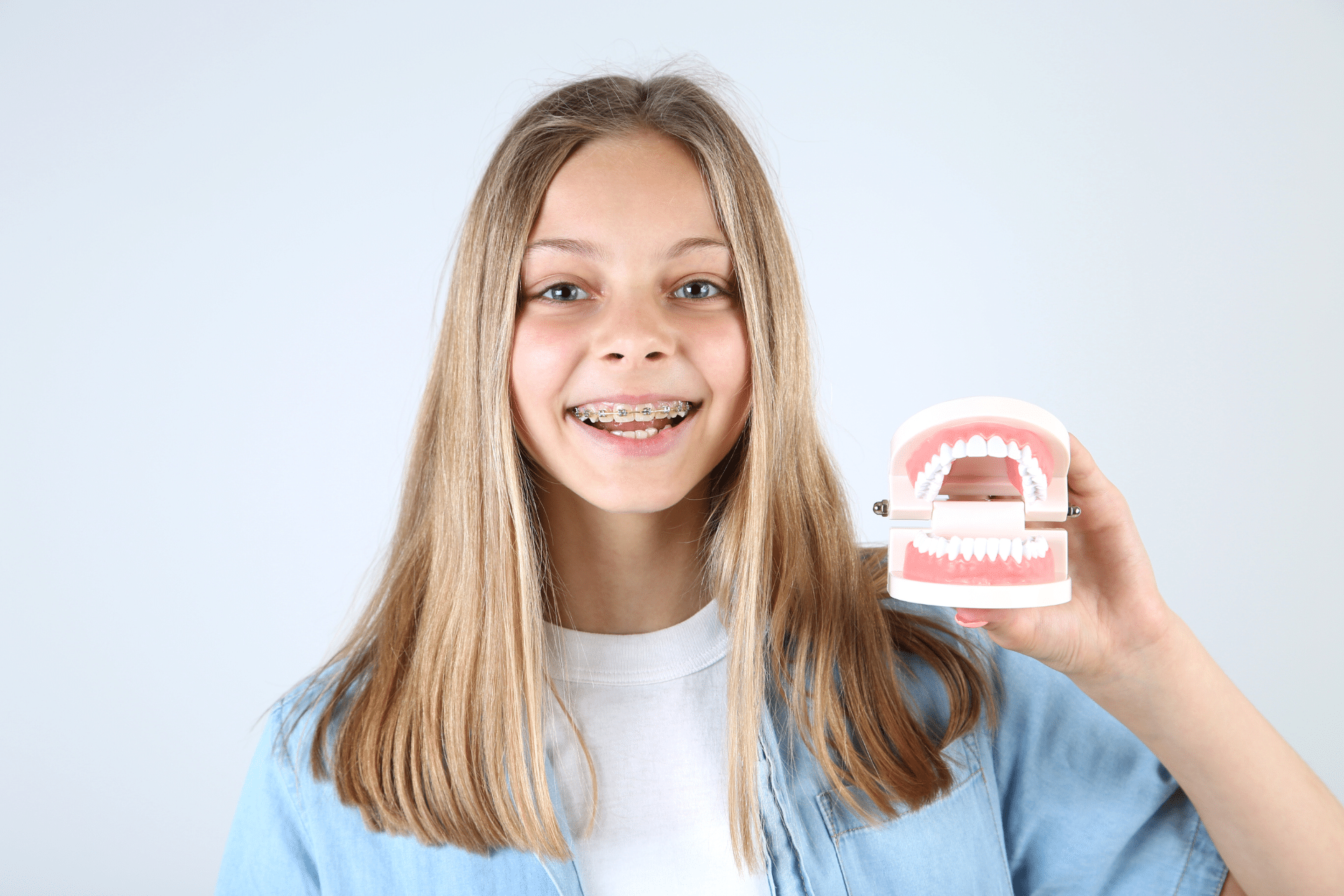
Phase 2 is often comprehensive care for children or teens after growth and tooth eruption are more complete. It may involve braces, clear aligners, elastics, retainers, or other appliances based on the child’s needs. At Greater Houston Orthodontics, Dr. Amir Davoody, Dr. Rana Mehr, and Dr. Panagiotis Kyteas evaluate these factors before recommending the right plan.
How Is Phase 2 Different From Phase 1 Orthodontic Treatment?
Phase 1 usually happens while a child still has a mix of baby teeth and permanent teeth. Its purpose is to address specific growth, spacing, eruption, or bite concerns early. It is not meant to finish every detail of the smile.
Phase 2 usually begins later, once the mouth is developed enough for more complete tooth movement. At this stage, care focuses on final alignment, bite fit, smile balance, and long-term stability. The American Association of Orthodontists explains that two-phase orthodontic treatment is based on growth and dental development, not age alone.
For some children, Phase 1 makes the second stage simpler by addressing larger growth or spacing concerns early. For others, another round of care is still needed to refine tooth positions and help the upper and lower teeth work together properly.
What Signs Can Show That Phase 2 May Be Getting Close?
One clear sign is that your child has lost most of the remaining baby teeth. The orthodontist needs enough adult teeth in place to plan movement efficiently.
Phase 2 may also be approaching if crowding, spacing, or bite problems remain after Phase 1 or during observation visits. Teeth may look better than before, but the bite may still need correction so the upper and lower teeth meet evenly.
Parents may notice that the front teeth do not line up well, the back teeth do not fit together comfortably, or the child has trouble biting into certain foods. These signs do not always mean active care should start immediately, but they are good reasons to schedule an evaluation.
Why Might an Orthodontist Wait Before Starting Phase 2?
An orthodontist may wait if several adult teeth still need to come in. Starting before the mouth is ready can make the process longer because the orthodontist may need to work around teeth that have not erupted yet.
Waiting can also help the orthodontist see jaw growth more clearly. Some bite concerns are easier to diagnose and manage once a child is closer to the teen years. In other cases, the teeth need time to settle after Phase 1 before the final plan is made.
What Happens During a Phase 2 Evaluation?
A Phase 2 evaluation looks at the teeth, bite, jaws, facial growth, and smile relationship. Digital imaging or scans may be used to check tooth positions, eruption patterns, root development, and available space.
If earlier orthodontic care was completed, the orthodontist may compare your child’s current development with the goals from Phase 1. From there, the recommendation may be braces, Invisalign clear aligners, another appliance, continued observation, or no further care yet.
The visit should give parents clear answers about whether it is time to begin, what appliance may be used, what timeline to expect, and how the plan supports long-term bite stability. The goal is to choose the most efficient window for your child’s teeth, bite, and growth.
How Can Parents Support the Best Phase 2 Timing?
Parents can support the process by keeping observation visits and watching for changes in tooth eruption, bite comfort, or jaw growth. If a retainer was provided after Phase 1, consistent wear is also important.
Tell the orthodontist if baby teeth are loose, adult teeth are coming in behind other teeth, chewing feels uncomfortable, or the bite seems to be changing. These details can help the orthodontist decide whether active care is appropriate or whether more observation is needed.
Good brushing and flossing also matter before Phase 2 starts. Healthy gums and clean teeth make braces or clear aligners safer and smoother. Strong home habits can also reduce the risk of white spots, gum irritation, or delays.
When Should You Schedule a Phase 2 Consultation in Houston, TX?
You should schedule a Phase 2 consultation if your child has completed Phase 1, is losing the last baby teeth, has adult teeth erupting unevenly, or still has a bite that looks off. You should also schedule a visit if your child has not been checked in a while and you are unsure whether the timing is right.
Greater Houston Orthodontics sees children and teens from Houston, TX and surrounding communities. During the visit, Dr. Davoody, Dr. Mehr, or Dr. Panos can evaluate your child’s development and explain whether Phase 2 should begin now or later.
If your child may be approaching the next stage of care, a consultation can give you a clear plan. Schedule a complimentary exam with Greater Houston Orthodontics to learn the best timing for Phase 2 orthodontic treatment in Houston, TX.